

Heal-All
$2.50 – $66.00Price range: $2.50 through $66.00
TO ORDER & SEE PRICING SCROLL DOWN
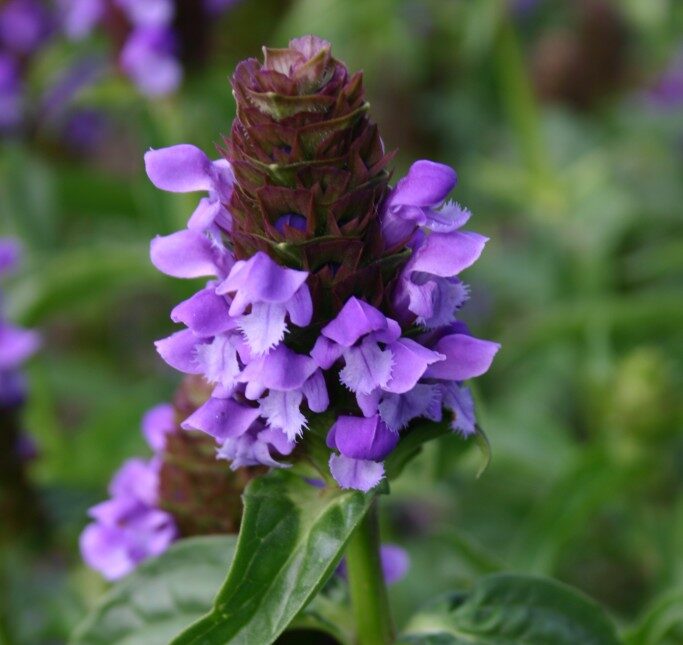
Heal-All (Prunella vulgaris var. lanceolata), also known as Lance Selfheal or Self-Heal, is a low-growing native perennial wildflower in the mint family. It produces short spikes of purple to violet flowers above opposite, lance-shaped leaves. Plants generally grow about 4–20 inches tall and spread gradually to form a dense groundcover.
Heal-All grows best in full sun to partial shade and moist to moderately dry soils. It is adaptable to a range of soil conditions and can remain green through much of the summer in the Pacific Northwest without supplemental irrigation once established.
Heal-All is well suited to native meadows, pollinator gardens, lawn alternatives, woodland edges, restoration plantings, roadsides, and naturalized landscapes. Its low-growing habit makes it particularly useful where a durable native groundcover is desired.
The flowers attract native bees, bumble bees, butterflies, hover flies, wasps, and other beneficial insects.
Heal-All is a perennial that spreads gradually through short rhizomes and can persist for many years. It flowers during the warmer months and tolerates regular mowing, making it useful as both a flowering groundcover and low-growing lawn alternative.
Native Range
North America, including the Pacific Northwest, with a broad native distribution across much of the continent.
In the Pacific Northwest, the native lance-leaved form occurs from Alaska and British Columbia south through California and east across much of North America. It is commonly found in meadows, forest openings, pastures, roadsides, and other open habitats.
Pacific Northwest Planting
Heal-All can be planted in either fall or spring.
Fall planting allows the seed to experience natural cool and moist conditions before spring growth. Spring planting can also be successful when seed is sown early and the planting area receives adequate moisture during establishment.
Prepare a firm, weed-free seed bed and broadcast the seed over the soil surface. Press it firmly into good contact with the soil rather than burying it deeply.
Fall Planting
Fall is a good planting season for Heal-All in the Pacific Northwest.
Sow after temperatures have cooled and fall moisture is available. Broadcast the seed evenly over the prepare
d area and press it into the soil surface.
Spring Planting
Heal-All can also be planted in spring.
Prepare a firm, weed-free seed bed and sow the seed shallowly. Good seed-to-soil contact is important for successful establishment.
Planting early in spring gives young plants time to establish while temperatures are moderate and soil moisture is available.
Planting in Other Regions
Heal-All is adaptable to a variety of climates and growing conditions.
It performs particularly well where some soil moisture is available during the growing season, although established plants can tolerate periods of summer dryness. It can grow in both full sun and partial shade.
Establishment & Growth
Heal-All establishes from seed and develops into a low-growing perennial over time.
Plants spread gradually through short rhizomes and can form dense patches. Flowering generally occurs from late spring through summer, with individual plants capable of producing flowers over an extended period.
The plants tolerate mowing and can remain low and compact when regularly maintained.
Choosing the Right Site
Choose a location with full sun to partial shade and soil that provides adequate moisture without prolonged standing water.
Heal-All is particularly well suited to:
- Native wildflower meadows
- Pollinator gardens
- Low-growing lawn alternatives
- Native groundcovers
- Woodland edges
- Moist meadows
- Restoration projects
- Roadsides
- Naturalized landscapes
- Low-maintenance landscapes
Its low stature makes it useful around taller grasses and wildflowers without becoming a dominant component of the planting.
Low-Growing Lawn Alternative
Heal-All can be used as a low-growing, native alternative to conventional lawn.
Its spreading growth habit allows it to form a dense groundcover, while its tolerance of regular mowing makes it suitable for areas where a shorter appearance is desired. When allowed to flower, it provides additional forage for native bees and other pollinating insects.
It is particularly useful for replacing portions of conventional lawn where a lower-maintenance, pollinator-friendly groundcover is desired.
Pollinator & Wildlife Value
Heal-All provides nectar and pollen for native bees, bumble bees, butterflies, hover flies, wasps, and other beneficial insects.
Its extended flowering period makes it a useful addition to landscapes designed to provide flowers throughout the growing season.
Larger Quantities
For quantities larger than those currently listed for sale, please contact us for availability and pricing.
Seeding Rates
The broadcast rate for seeding is 12–15 pounds per acre.
The seed drill rate for seeding in rows is 6 pounds per acre.
| Purchasing Options | Price | Quantity | |
|---|---|---|---|
| Small Packet | $2.50 | ||
Covers approximately 5 square feet. |
|||
| 10 Gram | $3.00 | ||
Covers approximately: |
|||
| 1/8 Pound | $12.00 | ||
Covers approximately: |
|||
| 1 Pound | $66.00 | ||
Covers approximately: |
|||
| Scientific Name | Prunella vulgaris L. ssp. lanceolata |
|---|---|
| Product Type | Herb, Native Flower |
| Color | Purple |
| Cycle | Perennial |
| Origin | NW Native species, North American Native species |
| Height | 3-12" |
| Bloom Season | Spring, Summer |
| Weeks to Bloom | 7 to 8 weeks |
| USDA Zone | 4 to 9 |
| Seeds Per Pound | 668,000 |
| Seeding Rate (lb./acre) | 6 |
| Pollen/Nectar | Nectar, Pollen |
| Pollinator(s) | Bats, Bees, Beneficial Insects, Birds |
| Notes | Heal All is thought to have several medicinal uses |
| Light Requirement | Full Sun, Part Sun/Shade |
| Planting Season | Spring, Fall |
Related products
-
Lupine – Small Flowered Bi-Color
Native Flower, Perennial$2.50 – $294.95Price range: $2.50 through $294.95