

Oatgrass – California
$2.50 – $57.00Price range: $2.50 through $57.00
TO ORDER & SEE PRICING SCROLL DOWN
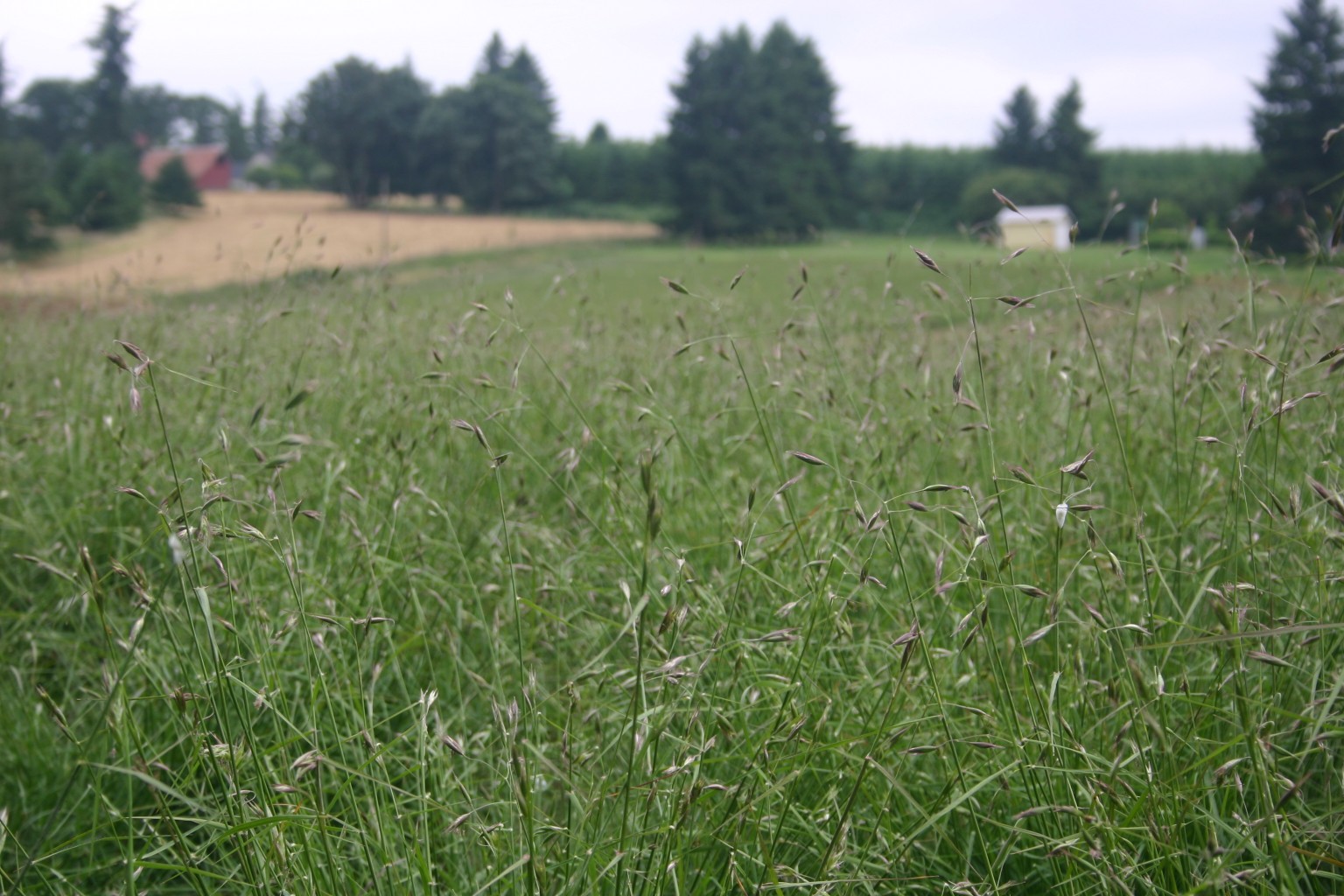
California Oatgrass (Danthonia californica) is a native, cool-season perennial bunchgrass valued for its adaptability, drought tolerance, forage production, and usefulness in native prairie, oak savanna, wildlife habitat, and restoration plantings.
California Oatgrass is a long-lived perennial that generally grows about 1–3 feet tall. It forms dense bunches of fine green foliage and produces open, airy seed heads in late spring and early summer. It is a distinctive and important grass in many native grassland communities throughout the Pacific Northwest and California.
California Oatgrass grows best in full sun and is adapted to a broad range of soil conditions, including sandy, rocky, silty, and clay soils. It can grow in both relatively dry upland sites and moist soils, including seasonally wet areas. Once established, it has good drought tolerance and can remain green for much of the year where adequate moisture is available.
California Oatgrass is well suited to native prairie plantings, oak savannas, meadows, grasslands, transitional wetlands, wildlife habitat, erosion control, disturbed-site restoration, vineyards, orchards, parks, and other conservation plantings.
California Oatgrass is a slow-growing grass compared with some more aggressive native grasses, but it can form dense stands over time. It tolerates grazing and can develop a sod-like growth habit under moderate grazing, making it useful for both conservation and rangeland applications.
Forage & Livestock
California Oatgrass is a valuable native forage grass, particularly in the Pacific Coast states. Before maturity, it is considered good to very good forage for cattle and horses and is also utilized by other livestock and wildlife.
The grass can provide substantial forage under appropriate grazing management and can remain green for extended periods in areas with sufficient moisture. It responds well to moderate grazing and can form dense stands as individual plants become more closely spaced.
California Oatgrass can tolerate grazing, but excessive grazing can weaken or deplete stands. Allowing plants adequate time to recover and produce seed can help maintain long-term stand health.
California Oatgrass is generally more palatable and nutritious while actively growing before maturity. As the plant matures, the foliage becomes less tender and forage quality declines.
The seeds are also used by birds and small mammals, while the grass provides cover and habitat for a variety of wildlife.
Native Range
British Columbia, Washington, Oregon, Idaho, Montana, Wyoming, Utah, Nevada, Colorado, California, and northern Mexico.
Pacific Northwest Planting
For gardeners, land managers, and restoration projects in the Pacific Northwest, California Oatgrass can be planted in either fall or spring.
Fall planting is generally a good option because cool temperatures and winter moisture provide favorable conditions for establishment. Sow seed into a prepared, weed-free planting area and cover the seed lightly.
California Oatgrass is relatively slow growing, so good weed control during establishment is important. Reduce competition from aggressive grasses and weeds before and after planting.
Spring planting is also possible when soil conditions are suitable. Sow as early as practical while adequate spring moisture is available and keep the planting area consistently moist during germination and early growth.
Fall Planting
Fall planting can be an excellent option for California Oatgrass in the Pacific Northwest.
Sow after the heat of summer has passed and temperatures have cooled. Cover the seed lightly and provide moisture if fall conditions are unusually dry.
Fall planting allows the seed to take advantage of natural winter and spring moisture and gives seedlings time to establish before the dry summer season.
Choose a well-drained planting location, although California Oatgrass can tolerate some seasonally wet conditions. Avoid areas with prolonged standing water.
Spring Planting
Spring planting can also be successful when adequate moisture is available.
Prepare a firm, weed-free seed bed and sow the seed shallowly, making sure it has good contact with the soil. Keep the planting area consistently moist during germination and early establishment.
Because California Oatgrass is relatively slow growing, controlling competing weeds is especially important during the first stages of establishment.
In drier regions, supplemental irrigation may be necessary for spring-planted seed to establish successfully.
Planting in Other Regions
California Oatgrass is broadly adapted across much of the western United States and is particularly well suited to the Pacific Coast and inland western regions within its native range.
It can grow on sites ranging from dry, rocky slopes and shallow soils to moist meadows and seasonally wet grasslands.
In colder climates, spring planting can be a reliable option once the soil can be worked.
In regions with reliable fall and winter moisture, fall planting is often preferable because it allows seedlings to establish before summer drought.
In warmer or drier areas, choose a site with adequate moisture during establishment. Once established, California Oatgrass can tolerate significant summer dryness.
Establishment & Long-Term Growth
California Oatgrass is a long-lived perennial, but it is relatively slow growing compared with many other grasses.
Prepare a firm, weed-free seed bed and provide good seed-to-soil contact. Avoid burying the seed deeply.
Keep the planting area adequately moist during germination and early growth. Controlling competing weeds and aggressive grasses is important because young California Oatgrass plants can be slow to compete.
Once established, California Oatgrass develops a strong perennial root system and can persist for many years. Under moderate grazing, plants can form dense, sod-like stands that provide forage and help reduce opportunities for invasive species to establish.
Choosing the Right Site
California Oatgrass performs best in full sun and can tolerate a wide range of soil conditions.
It can grow in sandy loams, silts, clays, rocky soils, and relatively infertile soils. It can also tolerate seasonally wet conditions as well as dry, well-drained sites.
California Oatgrass is particularly well suited to native prairie, oak savanna, meadow, grassland, and transitional wetland plantings.
Choose a site with good seed-to-soil contact and adequate moisture during establishment. Avoid areas where aggressive non-native grasses or weeds will overwhelm young seedlings.
Larger Quantities
For quantities larger than those currently listed for sale, please contact us for availability and pricing.
Seeding Rates
The broadcast rate for seeding is 70–87.5 pounds per acre.
The seed drill rate for seeding in rows is 35 pounds per acre.
| Purchasing Options | Price | Quantity | |
|---|---|---|---|
| Small Packet | $2.50 | ||
Covers approximately 5 square feet. |
|||
| 10 Gram | $3.00 | ||
Covers approximately: |
|||
| 1/16 Pound | $12.00 | ||
Covers approximately: |
|||
| 1 Pound | $57.00 | ||
Covers approximately: |
|||
| Scientific Name | Danthonia californica |
|---|---|
| Product Type | Native Grass |
| Color | Green |
| Cycle | Perennial |
| Origin | NW Native species, North American Native species |
| Height | 12-30" |
| Bloom Season | Spring |
| Seeds Per Pound | 40,000 |
| Seeding Rate (lb./acre) | 35 |
| Light Requirement | Full Sun |