



Baby Blue Eyes
$2.50 – $43.50Price range: $2.50 through $43.50
TO ORDER & SEE PRICING SCROLL DOWN
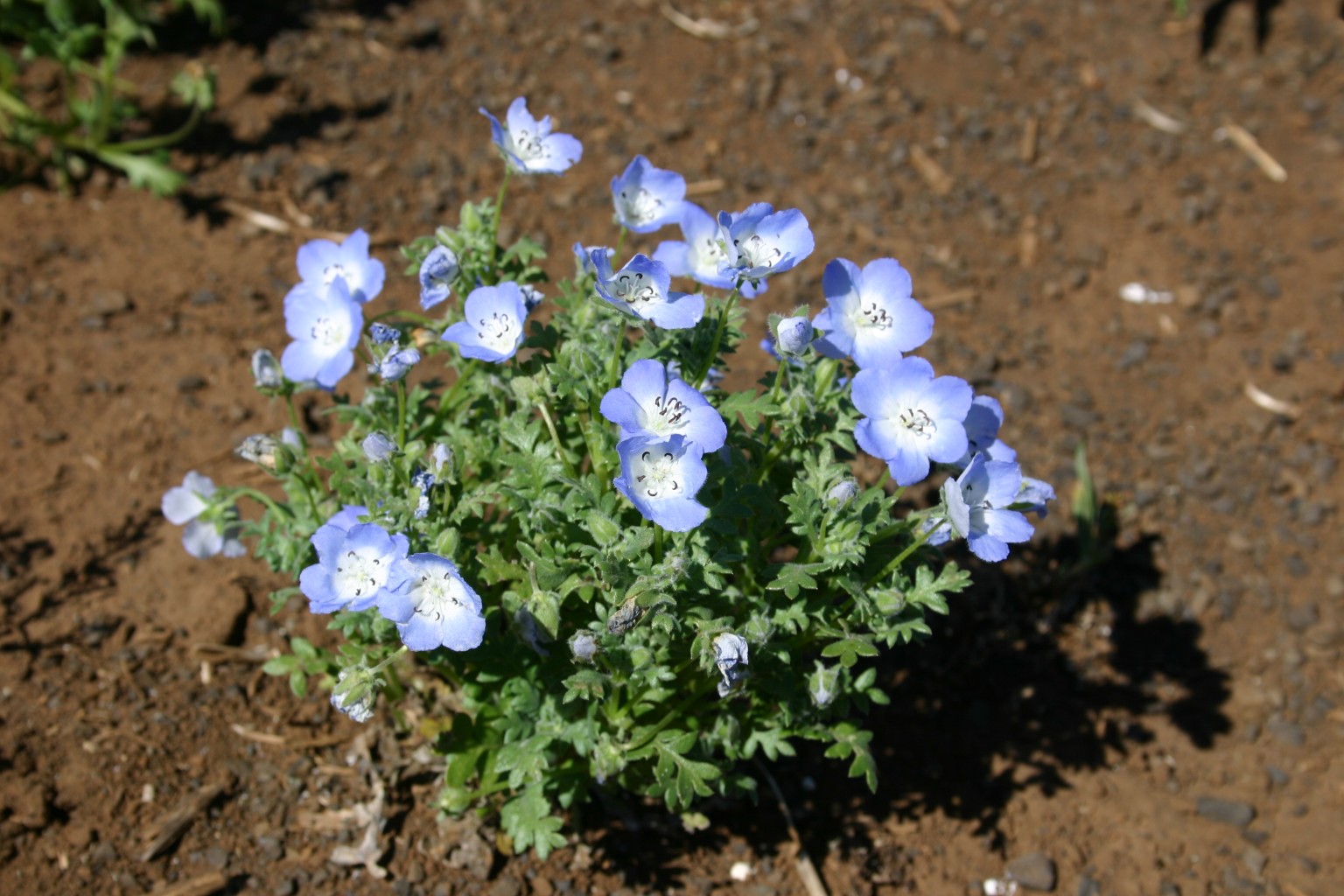
Baby Blue Eyes (Nemophila menziesii) is a charming, low-growing cool-season annual native to the western United States, particularly California and Oregon. It is valued for its delicate sky-blue flowers with distinctive white centers and its ability to provide a beautiful early-season display.
Baby Blue Eyes grows best in cool temperatures and moist, well-drained soil. It can grow in full sun to partial shade, although afternoon shade can be beneficial in areas with warmer temperatures. It performs especially well in locations with morning sun or filtered light.
Avoid areas that become excessively hot and dry during the growing season. Baby Blue Eyes is best suited to moist, well-drained soils and should not be planted where water remains standing for extended periods.
Baby Blue Eyes is well suited to woodland gardens, partially shaded borders, rock gardens, containers, meadow plantings, naturalized areas, and other locations where an early spring display is desired.
The delicate flowers attract bees and other pollinators, making Baby Blue Eyes a useful addition to wildlife-friendly and pollinator gardens.
As a cool-season annual, Baby Blue Eyes grows and flowers primarily during the cooler part of the year. In areas with mild winters, fall-planted seedlings can establish during the cool season and flower in early spring. In colder regions, spring planting can be used once soil and weather conditions are suitable.
Native Range
Baby Blue Eyes is native to the western United States, particularly California and Oregon.
Pacific Northwest Planting
For gardeners in the Pacific Northwest, Baby Blue Eyes can be planted in either fall or spring.
Fall planting is an excellent option because Baby Blue Eyes is a cool-season annual and its seed benefits from cool temperatures for germination. Sow seed directly into a prepared, weed-free planting area after the heat of summer has passed and temperatures have cooled.
Cover the seed lightly with soil and keep the planting area moist during germination and early establishment. Fall-planted seedlings can continue growing during mild winter conditions and produce an early spring display.
Spring planting is also possible once soil conditions are suitable. Sow as early as practical while temperatures are still cool and provide consistent moisture during germination and early growth.
Spring Planting
Sow Baby Blue Eyes seed directly outdoors once soil conditions are suitable and temperatures are cool.
Prepare a firm, weed-free seed bed and sow the seed shallowly, covering it lightly with soil. Keep the seed bed consistently moist during germination and early growth.
No special scarification treatment is required. Baby Blue Eyes seed germinates best under cool conditions.
In areas with warm springs and summers, spring planting should be timed early enough for the plants to complete their growth and flowering before intense summer heat arrives.
Fall Planting
Fall planting can be an excellent option for Baby Blue Eyes in the Pacific Northwest and other regions with mild winters.
Sow after the hottest part of summer has passed and temperatures have cooled. Cover lightly with soil and provide moisture if fall conditions are dry.
Fall planting allows the seed to experience cool conditions and can result in earlier spring growth and flowering.
For areas with wet winters, choose a well-drained planting location. Avoid sites where water remains standing for extended periods.
Planting in Other Regions
Baby Blue Eyes is best suited to regions where it can grow during the cooler part of the year. It is generally most successful when planted so that its growth and flowering occur before the arrival of intense summer heat.
In colder climates, spring planting is a reliable option once the soil can be worked and temperatures are suitable.
In regions with mild winters, fall planting is often preferable. Sow after summer heat has passed so the plants can establish during cool weather and flower in early spring.
In warmer climates, fall or winter planting may be preferable where winters are mild enough to support growth. Provide adequate moisture during germination and establishment and protect plants from excessive afternoon heat when possible.
Regardless of region, choose a moist, well-drained planting site and avoid areas that become excessively hot, dry, or waterlogged.
Larger Quantities
For quantities larger than those currently listed for sale, please contact us for availability and pricing.
Seeding Rates:
The broadcast rate for seeding is 16–20 pounds per acre.
The seed drill rate for seeding in rows is 8 pounds per acre.
| Purchasing Options | Price | Quantity | |
|---|---|---|---|
| Small Packet | $2.50 | ||
Covers approximately: |
|||
| 10 Gram | $3.00 | ||
Covers approximately: |
|||
| 1/4 Pound | $12.00 | ||
Covers approximately: |
|||
| 1 Pound | $43.50 | ||
Covers approximately: |
|||
| Scientific Name | Nemophila menziesii |
|---|---|
| Product Type | Native Flower |
| USDA Zone | 3 to 10 |
| Cycle | Annual |
| Color | Blue, White |
| Height | 6-12" |
| Light Requirement | Part Sun/Shade |
| Germination Time | 7-30 days |
| Weeks to Bloom | 7 to 8 weeks |
| Origin | NW Native species |
| Planting Season | Spring, Fall |
| Bloom Season | Spring |
| Seeding Rate (lb./acre) | 8 |
| Seeds Per Pound | 258,000 |
| Pollen/Nectar | Nectar, Pollen |
| Pollinator(s) | Bats, Bees, Beneficial Insects, Birds |
| Notes | You may want to add a filler such as sand or potting soil with your seeds before planting to help spread them more evenly and cover more area |
You may also like…


Related products
-
Lupine – Small Flowered Bi-Color
Native Flower, Perennial$2.50 – $294.95Price range: $2.50 through $294.95