

Hairgrass – Slender
$2.50 – $164.30Price range: $2.50 through $164.30
TO ORDER & SEE PRICING SCROLL DOWN
Slender Hairgrass (Deschampsia elongata) is a fine-textured, cool-season native grass valued for its delicate appearance, adaptability to moist sites, and usefulness in native restoration, erosion control, wildlife habitat, and meadow plantings. It is generally a biennial or short-lived perennial, depending on growing conditions.
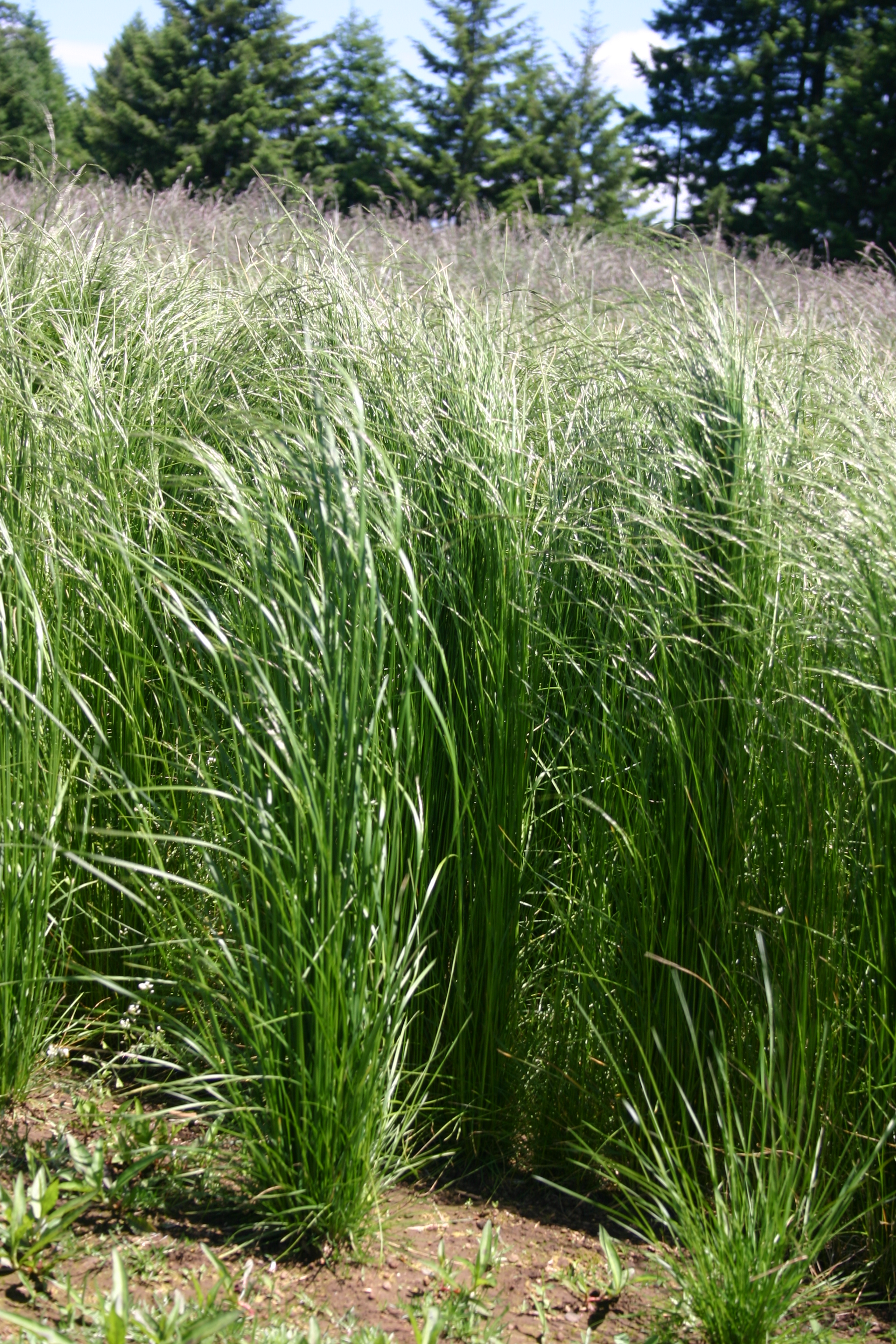
Slender Hairgrass forms dense, fine-textured bunches of narrow green leaves and produces airy, open seed heads that give the plant a graceful appearance. It generally grows about 1–3 feet tall and can provide attractive structure in native grass and wildflower plantings.
Slender Hairgrass grows well in full sun to partial shade and is particularly well suited to moist sites. It can be found naturally in meadows, forest openings, woodlands, grasslands, wetlands, stream and lake margins, and other areas where adequate moisture is available.
It is adaptable to a range of soil types and can tolerate both open and partially shaded conditions. Although it is commonly associated with moist soils, it can also occur in drier upland habitats when growing conditions are favorable.
Slender Hairgrass is well suited to native meadows, wetland edges, streambanks, riparian areas, woodland plantings, coastal prairies, erosion-control plantings, disturbed-site restoration, and wildlife habitat. Its fine texture and relatively non-aggressive growth make it a useful companion to native wildflowers and other grasses.
Forage & Livestock
Slender Hairgrass can provide fair to good forage for livestock and wildlife, particularly while the plants are young and actively growing.
It can be grazed by livestock and is also utilized by wildlife. Forage quality is best before the plants mature and become more fibrous.
Because Slender Hairgrass is generally a biennial or short-lived perennial, it is better suited as a component of a diverse native forage, pasture, or habitat planting rather than as a permanent stand by itself.
Avoid excessive or continuous grazing, particularly during establishment, to allow plants adequate time to develop roots and produce seed.
Native Range
Alaska, British Columbia, Yukon, Washington, Oregon, Idaho, Montana, Wyoming, Utah, Nevada, California, Arizona, New Mexico, Colorado, and Mexico.
Pacific Northwest Planting
For gardeners, land managers, and restoration projects in the Pacific Northwest, Slender Hairgrass can be planted in either fall or spring.
Fall planting is a good option where adequate soil moisture is available. Sow seed into a prepared, weed-free planting area and cover the seed lightly.
Spring planting is also possible when soil conditions are suitable. Sow as early as practical while adequate spring moisture is available and keep the planting area consistently moist during germination and early establishment.
Slender Hairgrass is relatively slow to establish, so controlling competing weeds during the early stages of growth is important.
Fall Planting
Fall planting can be an excellent option for Slender Hairgrass in the Pacific Northwest.
Sow after the heat of summer has passed and temperatures have cooled. Cover the seed lightly and provide moisture if fall conditions are unusually dry.
Fall planting allows the seed to experience cool, moist conditions and take advantage of winter and spring moisture.
Slender Hairgrass seed does not require a complicated treatment for outdoor fall sowing. Natural exposure to cool conditions can help provide favorable germination conditions.
Choose a well-drained planting location, particularly in areas with wet winters.
Spring Planting
Spring planting can also be successful when adequate moisture is available.
Prepare a firm, weed-free seed bed and sow the seed shallowly, making sure it has good contact with the soil. Keep the planting area consistently moist during germination and early establishment.
Because Slender Hairgrass can establish slowly, keep competing vegetation under control while seedlings are developing.
In areas with dry summers, supplemental moisture may be necessary for spring-planted seed to establish successfully.
Planting in Other Regions
Slender Hairgrass is best suited to regions where adequate moisture is available during the growing season, although it can occur in a surprisingly broad range of habitats from sea level to high elevations.
In cooler climates, spring planting is a reliable option once soil conditions are suitable.
In regions with reliable fall and winter moisture, fall planting can allow the seed to establish during the cool season.
In warmer or drier regions, choose a site with adequate moisture and some protection from intense afternoon heat. Partial shade can be beneficial where summer temperatures are high.
Regardless of region, choose a site appropriate for a cool-season grass and provide adequate moisture during germination and establishment.
Establishment & Long-Term Growth
Slender Hairgrass can establish relatively quickly under favorable conditions, although it may behave as a biennial or short-lived perennial depending on the site.
Prepare a firm, weed-free seed bed and provide good seed-to-soil contact. Avoid burying the seed deeply.
Keep the planting area consistently moist during germination and early growth. Controlling competing vegetation is especially important because young Slender Hairgrass plants can be overtaken by more aggressive species.
Once established, Slender Hairgrass can contribute fine-textured native grass cover to meadows, restoration sites, riparian areas, and wildlife plantings.
Choosing the Right Site
Slender Hairgrass performs well in full sun to partial shade and is especially suited to moist soils.
It can grow in sandy and gravelly soils as well as other well-drained soil types. It naturally occurs in moist meadows, forest openings, wetlands, riparian areas, stream margins, and woodland habitats.
Choose a site with adequate moisture during the growing season. Avoid extremely dry locations unless supplemental water is available during establishment.
Larger Quantities
For quantities larger than those currently listed for sale, please contact us for availability and pricing.
Seeding Rates
The broadcast rate for seeding is 10 pounds per acre.
The seed drill rate for seeding in rows is 6 pounds per acre.
| Purchasing Options | Price | Quantity | |
|---|---|---|---|
| Small Packet | $2.50 | ||
Covers approximately 5 square feet. |
|||
| 10 Gram | $3.00 | ||
Covers approximately: |
|||
| 1/4 Pound | $12.00 | ||
Covers approximately: |
|||
| 1 Pound | $21.00 | ||
Covers approximately: |
|||
| 7 Pound Bag | $115.01 | ||
Covers approximately: |
|||
| 10 Pound Bag | $164.30 | ||
Covers approximately: |
|||
| Scientific Name | Deschampsia elongata |
|---|---|
| Product Type | Native Grass |
| Color | Green |
| Cycle | Perennial |
| Origin | NW Native species, North American Native species |
| Height | 12-36" |
| Planting Season | Early Spring, Fall |
| Seeds Per Pound | 1,860,000 |
| Seeding Rate (lb./acre) | 6 |
| Light Requirement | Full Sun, Part Sun/Shade |
Related products
-
Northwest Grassland Economy Mix
Native Grass Mix, Perennial$2.50 – $135.00Price range: $2.50 through $135.00 -
Blanketflower – Indian Perennial
Native Flower, Perennial$2.50 – $57.00Price range: $2.50 through $57.00