
Camas – Common
$2.50 – $330.00Price range: $2.50 through $330.00
TO ORDER & SEE PRICING SCROLL DOWN
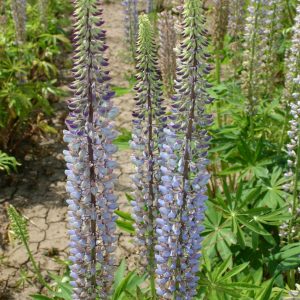
Common Camas (Camassia quamash) is a native, cool-season perennial bulbous wildflower known for its striking blue to violet, star-shaped flowers. It is an important native plant of Pacific Northwest meadows, prairies, grasslands, and seasonally wet areas.
Common Camas generally grows 1–3 feet tall and produces narrow, grass-like leaves from the base of the plant. In spring, upright flower stalks rise above the foliage and produce clusters of blue-violet flowers.
Common Camas grows best in full sun but can tolerate some partial shade. It is naturally adapted to sites that are moist during the winter and spring and become considerably drier by late spring or summer. It can be found in wet meadows, prairies, grassy slopes, woodland openings, and areas around seasonal wetlands, springs, and intermittent streams.
Common Camas is well suited to native meadows, prairie plantings, pollinator gardens, rain gardens, woodland edges, wetland restoration, wildlife habitat, and naturalized landscapes.
The flowers attract a variety of native pollinators, including bumble bees, mason bees, hover flies, and other insects. Common Camas can be an especially valuable early-season flowering plant in native meadow and prairie plantings.
Common Camas has also played an important cultural and historical role for Indigenous peoples of the Pacific Northwest. Its bulbs were traditionally harvested and prepared as an important food source. Although the bulbs are edible when properly identified and prepared, we recommend growing the plant for its ornamental, ecological, and restoration value rather than harvesting bulbs from a new planting.
Native Range
British Columbia, Alberta, Washington, Oregon, Idaho, Montana, Wyoming, Utah, Nevada, and California.
Pacific Northwest Planting
For gardeners and restoration projects in the Pacific Northwest, fall planting is generally the preferred method for Common Camas.
Sow seed directly outdoors after temperatures have cooled and fall moisture is available. Prepare a firm, weed-free planting area and cover the seed lightly.
Common Camas seed has natural dormancy and benefits from an extended period of cold, moist conditions before germination. Fall planting allows the seed to experience these conditions naturally.
Spring planting is possible, but simply sowing the seed in spring may result in little or no germination during that growing season unless the seed has already received the necessary cold, moist treatment.
Fall Planting
Fall is an excellent planting season for Common Camas in the Pacific Northwest.
Sow after the heat of summer has passed and temperatures have cooled. Cover the seed approximately 1/8–1/4 inch deep and keep the planting area free of competing vegetation.
Natural winter conditions provide the cold, moist period needed to help break seed dormancy. Seedlings commonly emerge during late winter or early spring under favorable conditions.
Choose a location that is moist during the winter and spring but can dry out later in the growing season. Avoid areas with prolonged standing water.
Spring Planting
Spring planting can be successful if the seed has first received the necessary cold, moist treatment.
Common Camas seed typically requires approximately 60–100 days of cold, moist stratification for maximum germination. A practical way to provide this naturally is to plant the seed outdoors in the fall.
If planting in spring with untreated seed, germination may be delayed until the following winter or spring.
Prepare a firm, weed-free seed bed and sow the seed shallowly. Keep the planting area adequately moist during the spring growing season and control competing vegetation.
Planting in Other Regions
Common Camas is best suited to regions within or near its native range in the Pacific Northwest and western interior.
It performs best in full sun to partial shade and is particularly well adapted to areas that receive ample moisture during the cool season and become drier during summer.
In colder climates, fall planting can still be successful where the seed can experience adequate winter chilling.
In warmer or drier regions, choose a site with sufficient winter and spring moisture. Avoid extremely dry sites where plants cannot complete their spring growth cycle.
Establishment & Long-Term Growth
Common Camas requires patience when grown from seed.
Seedlings are small during their first growing season and can be vulnerable to weeds, competition, and drying conditions. Keep competing vegetation under control and provide adequate spring moisture.
Plants grown from seed generally do not flower during their first year. Common Camas typically requires several growing seasons to develop bulbs large enough to flower, with flowering and seed production commonly beginning around the third or fourth growing season.
Once established, Common Camas is a long-lived perennial that can persist and gradually form larger colonies in suitable conditions.
The foliage naturally dies back after flowering as the plant enters its summer dormant period. This is normal and allows the plant to survive the dry summer conditions common in much of its native range.
Choosing the Right Site
Choose a full-sun to partially shaded location with moist, well-drained soil during the winter and spring.
Common Camas is particularly well suited to seasonal wetlands, wet meadows, prairies, grassy slopes, woodland openings, and areas near springs or intermittent streams.
The ideal site should receive adequate moisture during the cool growing season but become relatively dry later in the summer.
Avoid areas with heavy, permanent saturation or standing water throughout the growing season.
Larger Quantities
For quantities larger than those currently listed for sale, please contact us for availability and pricing.
Seeding Rates
The broadcast rate for seeding is 20–25 pounds per acre.
The seed drill rate for seeding in rows is 10 pounds per acre.
| Purchasing Options | Price | Quantity | |
|---|---|---|---|
| Small Packet | $2.50 | ||
Covers approximately: |
|||
| 5 Gram | $3.00 | ||
Covers approximately: |
|||
| 1/32 Pound | $12.00 | ||
Covers approximately: |
|||
| 1 Pound | $330.00 | ||
Covers approximately: |
|||
| Scientific Name | Camassia quamash |
|---|---|
| Product Type | Native Flower |
| Color | Blue |
| Cycle | Perennial |
| Origin | NW Native species |
| Height | 12-24" |
| Planting Season | Spring, Fall |
| Bloom Season | Spring, Summer |
| Weeks to Bloom | 4 to 6 weeks |
| USDA Zone | 3 to 7 |
| Seeds Per Pound | 117,000 |
| Seeding Rate (lb./acre) | 10 |
| Pollen/Nectar | Pollen |
| Pollinator(s) | Honey Bees, Native Bees |
| Notes | Common Camas is found throughout much of the Pacific Northwest |