
Hay Seed Forager
$247.85 – $999.00Price range: $247.85 through $999.00
SCROLL DOWN FOR PRICING & BAG SIZING AVAILABLE TO PURCHASE
Quality Grass Hay for Livestock & Managed Pasture
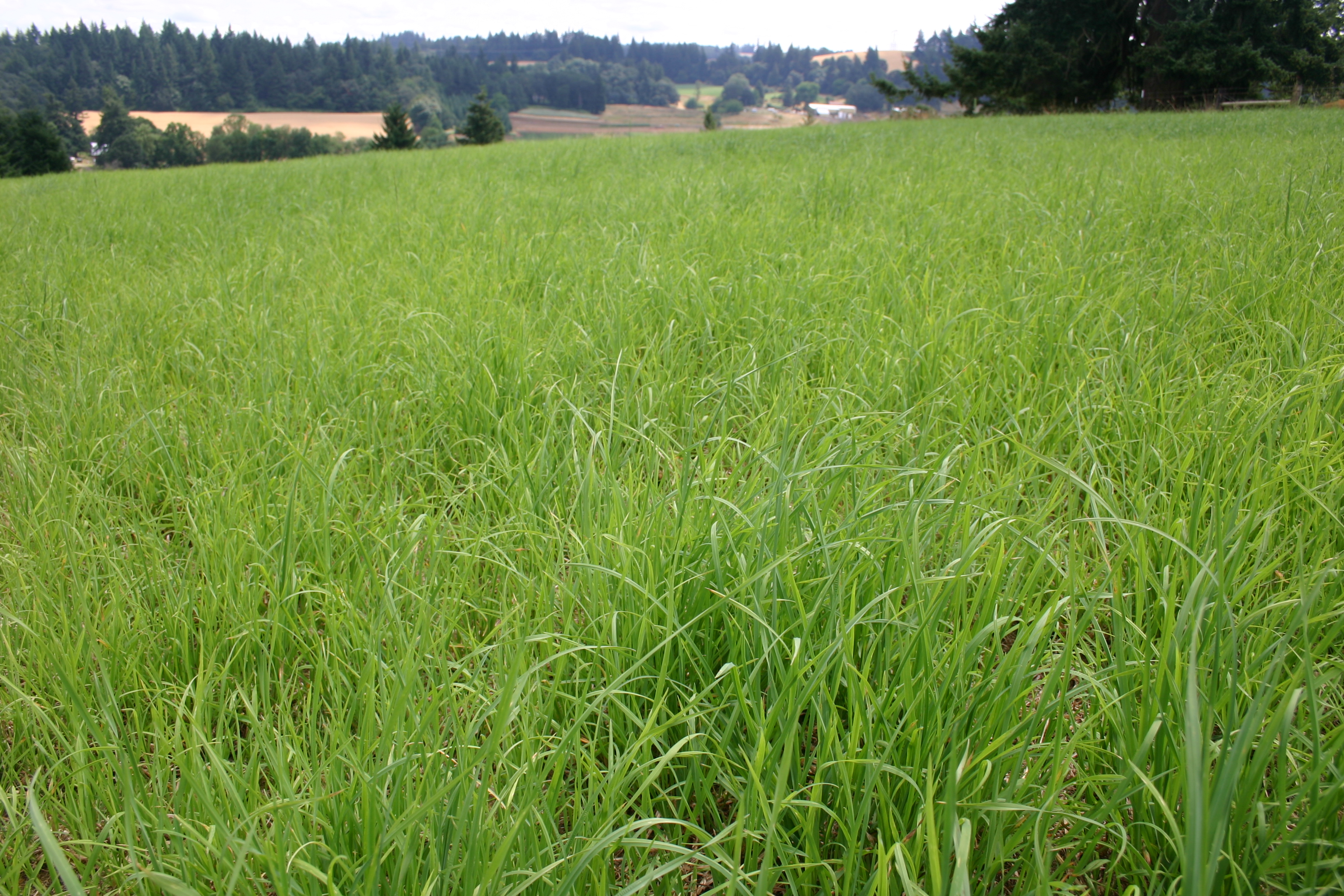
Hay Seed Forager is a perennial cool-season grass blend designed primarily for producing high-quality grass hay, while also providing useful forage for managed pasture and light to moderate grazing.
The combination of orchardgrass, timothy, forage-type tall fescue, forage-type perennial ryegrass, and annual ryegrass provides a balance of palatability, hay quality, establishment, and pasture performance.
Orchardgrass and timothy make up the largest portion of the mix and provide quality grass forage well suited to hay production. Tall fescue adds durability and persistence, while the ryegrasses contribute faster establishment and early-season growth.
This mix is particularly well suited for horse hay and can also provide quality forage for cattle, sheep, goats, alpacas, and llamas when properly managed.
Because this is a grass-only mix with no legumes, it can also be a good choice for producers who prefer to avoid clover or other legume species in their hay or pasture.
Seed Mix
- 45% Orchardgrass— A productive perennial cool-season bunchgrass valued for good palatability, quality hay, strong spring growth, and suitability for both hay and pasture.
- 20% Timothy— A palatable cool-season perennial grass known for soft, quality forage and its popularity in horse hay. It performs best where adequate moisture is available.
- 20% Forage-Type Tall Fescue— A long-lived perennial grass valued for durability, strong root development, drought tolerance, and regrowth. The variety used in this mix is a forage type selected for livestock use.
- 10% Forage-Type Perennial Ryegrass— A highly palatable, fast-establishing perennial grass that contributes quality forage and early-season growth. The variety used in this mix is selected for livestock grazing.
- 5% Annual Ryegrass— A fast-establishing grass that provides quick seasonal growth and early forage while the perennial species become established.
Seed percentages are approximate and may vary depending on seed availability. The ryegrass and tall fescue used in this mix are forage types intended for livestock use.
Which Animals Can Use Hay Seed Forager?
Hay Seed Forager is primarily intended for hay production, particularly horse hay, but the grasses in this blend can provide useful forage for a variety of livestock.
Horses — Excellent Choice
Hay Seed Forager is particularly well suited for horse hay.
Orchardgrass and timothy provide palatable, soft-textured grass forage that is widely used in horse hay production. The mix also provides a balance of perennial grasses that can produce a useful hay crop under favorable growing conditions.
It can also be used for managed horse pasture, although its primary purpose is hay production.
Horse owners should consider the specific varieties and endophyte status of tall fescue and perennial ryegrass when selecting pasture or hay seed for horses.
Cattle — Good Choice
Hay Seed Forager can provide quality grass forage for cattle as hay or managed pasture.
Orchardgrass, tall fescue, and ryegrass provide useful forage, while timothy contributes additional palatable grass forage.
For cattle operations primarily focused on grazing durability rather than hay production, a pasture-specific blend may be a better choice.
Sheep — Good Choice
The grasses in Hay Seed Forager can provide quality forage for sheep.
It can be used for hay production or managed grazing, although this mix is primarily designed around grass hay production.
For operations needing a pasture specifically designed for repeated grazing, a more grazing-oriented blend may provide greater durability.
Goats — Good Choice for Managed Grazing
Goats can utilize the grasses in Hay Seed Forager as part of a managed grazing system.
Because goats naturally prefer a varied diet that can include browse and forbs in addition to grasses, this is better suited to operations looking for quality grass forage rather than a specialized goat pasture.
For hay, the grass-based composition can provide useful forage for goats when harvested at an appropriate stage.
Alpacas & Llamas — Good Choice
Hay Seed Forager can provide useful grass hay and managed pasture forage for alpacas and llamas.
The grass-based composition makes it an option for producers looking for hay without added legumes.
As with other livestock, pasture should be managed to prevent excessive grazing and allow adequate recovery.
Best Uses
Hay Seed Forager is particularly well suited for:
- Horse hay
• Grass hay production
• Hayfields
• Cattle hay
• Sheep hay
• Goat hay
• Alpaca and llama hay
• Managed pasture
• Light to moderate grazing
• Farms producing both hay and pasture
• Grass-only forage systems
• Pastures where clover or other legumes are not desired
• Cool-season hay production
When Is This Mix Not the Best Choice?
Hay Seed Forager is primarily a hay-oriented grass blend, rather than a heavy-use grazing or high-legume pasture mix.
It may not be the best choice for:
- Heavy continuous grazing
• High-traffic livestock areas
• Intensive cattle grazing
• Pastures requiring exceptional summer drought tolerance
• Dryland locations with limited summer moisture
• Producers specifically looking for a high-legume or high-protein forage mix
• Pastures where maximum grazing persistence is the primary goal
• Producers wanting a pasture specifically designed around browse and forage diversity for goats
For these situations, a grazing-specific, drought-tolerant, or more diverse pasture blend may be a better fit.
Animal Suitability at a Glance
| Animal | Suitability | Recommended Use |
| Horses | ⭐⭐⭐⭐⭐ Excellent | Hay & managed pasture |
| Cattle | ⭐⭐⭐⭐ Good | Hay & light/moderate grazing |
| Sheep | ⭐⭐⭐⭐ Good | Hay & managed grazing |
| Goats | ⭐⭐⭐⭐ Good | Hay & managed grazing |
| Alpacas & Llamas | ⭐⭐⭐⭐ Good | Hay & managed grazing |
Best overall fit: Quality grass hay, particularly horse hay, with additional use for managed pasture and light to moderate grazing.
Why Choose Hay Seed Forager?
Hay Seed Forager is designed for producers who want a palatable, grass-based hay mix that can also be used for managed pasture.
The 45% orchardgrass and 20% timothy provide the primary hay-producing grasses, while forage-type tall fescue adds durability and persistence to the stand.
Perennial ryegrass contributes palatable, fast-establishing forage, and annual ryegrass provides quick seasonal growth during establishment.
The result is a versatile grass blend that can produce quality hay while still providing useful forage for managed grazing.
Because there are no legumes in the mix, Hay Seed Forager is also a good option for producers who want a grass-only hay or pasture stand.
Best overall fit: horse hay and quality grass hay production, with additional use for managed pasture.
Livestock nutritional requirements vary by animal, age, production stage, and overall diet. Hay and pasture should be evaluated as part of the animal’s complete feeding program.
Hay Production
Hay Seed Forager is primarily designed for grass hay production.
Orchardgrass and timothy provide the core of the hay blend and are valued for palatability and forage quality. Tall fescue contributes durability and regrowth, while the ryegrasses help with establishment and early growth.
Like all hay crops, harvest timing has a major effect on forage quality, yield, and drying time. Weather, crop maturity, cutting height, moisture, wind, and swath management all influence how quickly hay cures.
For best hay quality, harvest should be timed according to the desired balance between forage quality and yield.
Pasture & Grazing Use
Hay Seed Forager can also be used as a managed pasture, but it should not be confused with a heavy-use grazing mix.
Orchardgrass and perennial ryegrass provide palatable forage, while tall fescue contributes durability and persistence.
Because orchardgrass and perennial ryegrass can be weakened by repeated close grazing, avoid continuous heavy grazing and allow adequate recovery between grazing periods.
For producers expecting frequent livestock traffic or intensive grazing, a more pasture-focused blend such as Durable Pasture Mix may be a better fit.
Drought Tolerance & Water Requirements
Hay Seed Forager has some drought tolerance because of its tall fescue and orchardgrass components, but it is not a drought-tolerant dryland hay mix.
Timothy and perennial ryegrass perform best with adequate moisture, and perennial ryegrass in particular can decline during extended periods of hot, dry weather.
For this reason, Hay Seed Forager performs best where adequate soil moisture is available during the growing season.
Summer irrigation can be beneficial in areas with prolonged dry conditions, particularly when consistent forage production is desired.
Irrigation Requirements
Hay Seed Forager can perform well without irrigation in areas where natural rainfall provides adequate moisture during the growing season.
In dry-summer regions, irrigation may be needed to maintain strong summer growth and support consistent hay production.
How much water is required depends on location, soil type, weather, crop maturity, and irrigation system.
Sandy soils generally require more frequent irrigation because they hold less water, while heavier soils may retain moisture longer.
Regional Fit
Willamette Valley — Excellent Choice
Hay Seed Forager is well suited to the Willamette Valley.
The cool, moist growing conditions are favorable for orchardgrass, timothy, perennial ryegrass, and tall fescue, making the region a strong fit for grass hay production.
Western Oregon — Excellent Choice
The mix is well suited to Western Oregon hay production and pasture systems where adequate moisture is available.
Southern Oregon — Good With Irrigation
Hay Seed Forager can perform well in Southern Oregon where irrigation is available.
Summer heat and dry conditions can reduce growth, particularly from perennial ryegrass and timothy.
Central Oregon — Needs Irrigation
Irrigation is recommended for reliable production in Central Oregon.
The dry summer climate can significantly reduce growth without adequate moisture.
Eastern Oregon — Use With Care
Hay Seed Forager is not primarily a dryland hay mix for Eastern Oregon.
The tall fescue and orchardgrass provide some drought tolerance, but the perennial ryegrass and timothy components require more consistent moisture.
Where irrigation is available, the mix may be suitable for appropriate sites. Dryland producers should consider a blend specifically selected for local Eastern Oregon conditions.
Grazing Management
If Hay Seed Forager is used for pasture, rotational or controlled grazing is recommended.
Avoid repeated close grazing, particularly with orchardgrass and perennial ryegrass.
Allow adequate recovery between grazing periods to maintain plant vigor and long-term stand productivity.
Grazing management should be adjusted according to livestock type, stocking rate, season, weather, soil moisture, and pasture growth.
For operations where heavy livestock traffic and grazing durability are the primary goals, a more grazing-focused mix may be preferable.
Soil & Fertility
A soil test is recommended before planting to determine soil pH and nutrient requirements.
Adequate fertility is important for establishment, forage production, and long-term stand performance.
Because this is a grass-only mix, nitrogen management can be particularly important for maintaining productive hay yields.
Fertilizer requirements vary depending on soil type, expected yield, rainfall, irrigation, and management.
Planting Information
Drilled: 15 lbs. per acre
Broadcast: 30–37.5 lbs. per acre
Preferred Soil Temperature When Planting: 50–65°F
For best establishment, prepare a firm, well-prepared seedbed and plant when soil moisture and temperatures are favorable.
We recommend soil temperatures between 50 and 65°F, which generally corresponds to daytime air temperatures of approximately 60–75°F during suitable planting conditions.
Good seed-to-soil contact is important for uniform establishment.
Avoid planting too deeply.
When broadcasting, use the higher seeding rate because seed placement and soil contact are less uniform than with drilled planting.
After establishment, allow the stand to develop adequate roots before beginning regular grazing.
| Purchasing Options | Price | Quantity | |
|---|---|---|---|
| 25 Pound Bag | $247.85 | ||
Covers approximately 72,600 square feet. |
|||
| 50 Pound Bag | $406.25 | ||
Covers approximately 145,200 square feet. |
|||
| 150 Pound | $999.00 | ||
Covers approximately 435,600 square feet. |
|||
| Product Type | Forage/Pasture Grass, Grass Mix |
|---|---|
| Cycle | Perennial |
| Origin | Introduced species |
| Seeds Per Pound | 493,090 |
| Seeding Rate (lb./acre) | 15 |
| Color | Green |
Related products
-
Northern Exposure Turf Mix
Grass Mix, Lawn/Turf Grass, Perennial$6.00 – $658.50Price range: $6.00 through $658.50 -
Buck Fever Trophy Wildlife Mix
Cereals, Flower Mix, Forage Flower, Forage Legume, Forage/Pasture Grass, Grass Mix, Perennial$40.70 – $477.00Price range: $40.70 through $477.00 -
Cascade Extreme Turf Mix
Grass Mix, Lawn/Turf Grass, Perennial$6.00 – $711.00Price range: $6.00 through $711.00 -
Hay Seed Pasture King
Forage Legume, Forage/Pasture Grass, Grass Mix, Perennial$228.75 – $922.50Price range: $228.75 through $922.50